The ISO series
ISO 3864-2:2016 gives design principles for product safety labels, as a supplement to ISO 3864-1. According to ISO, the purpose of such a label is to warn people of a particular hazard and to indicate how to avoid it. The standard applies to all products in all branches of industry. It does not apply to chemical labels, to the transport of dangerous goods or to sectors with deviating legislation.
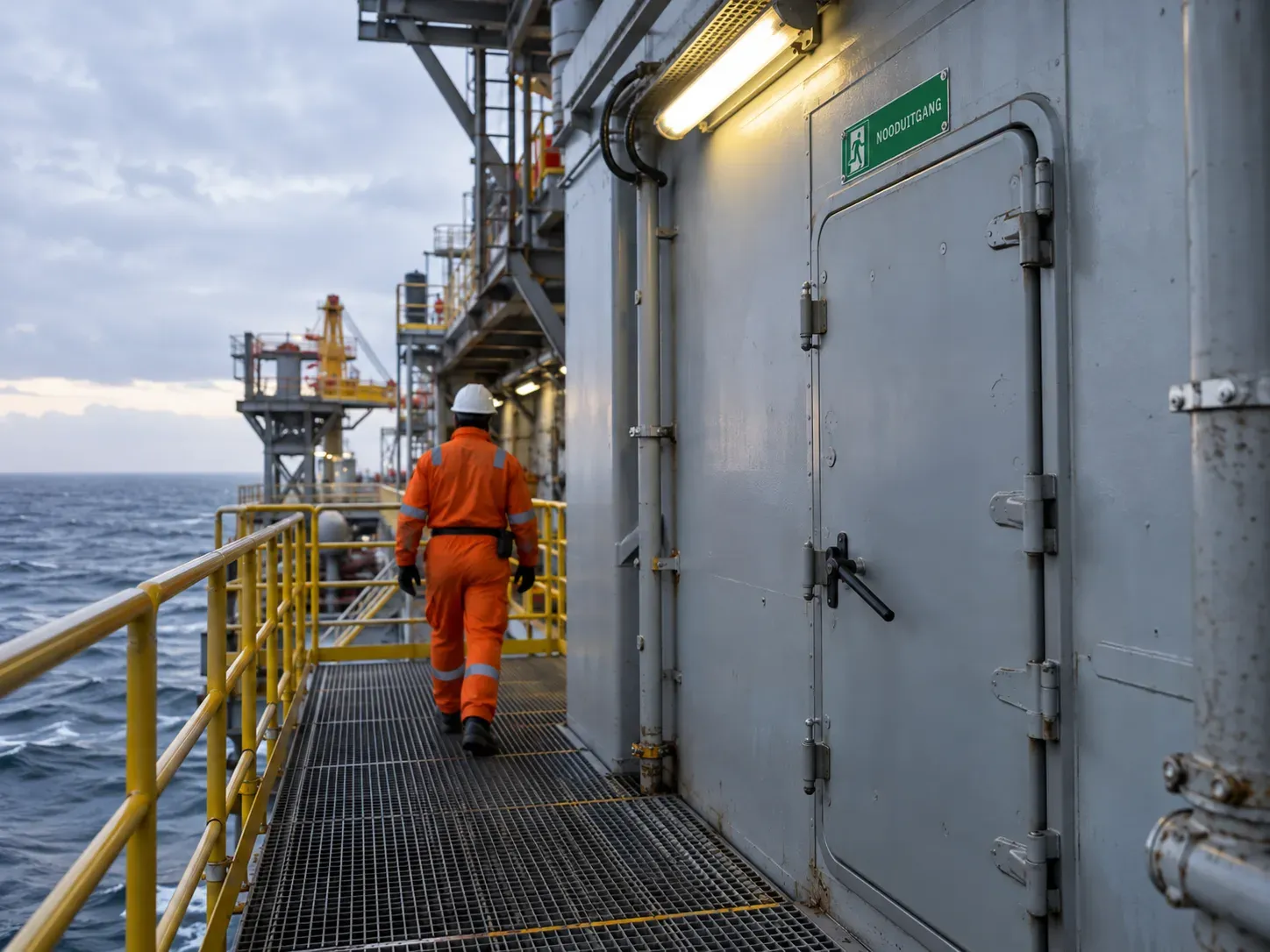
ISO 3864-1:2011 describes the safety colours and design principles for safety signs. ISO 7010:2019 lays down the registered safety signs. The shape and colour of each sign follow ISO 3864-1; the design of the symbol follows ISO 3864-3.
ANSI Z535.4
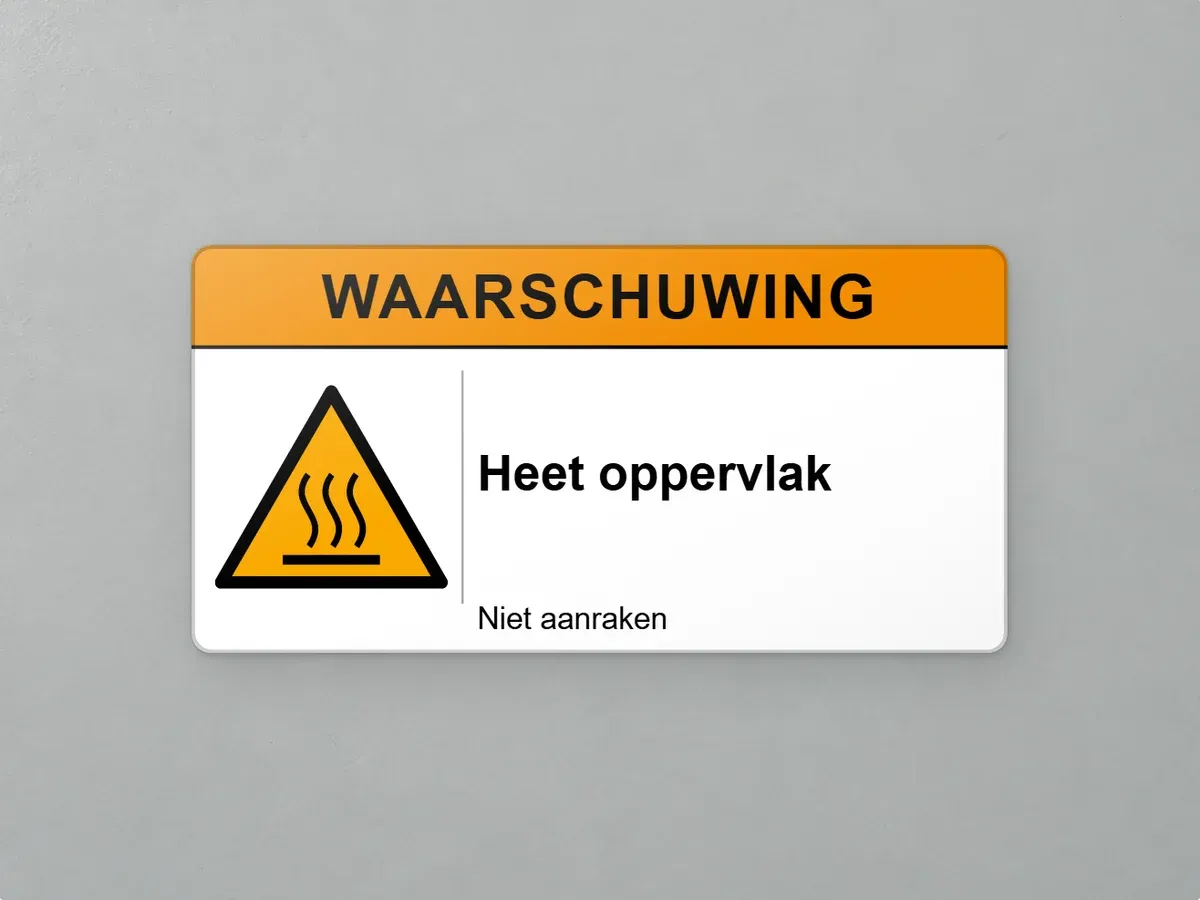
ANSI/NEMA Z535.4 (2023 edition) is the part of the American Z535 series for product labels. According to ANSI, a label consists of a signal word panel and a text panel, optionally with a pictogram. ANSI describes four signal words for hazards:
- DANGER: white letters on red; a hazard that, if not avoided, results in death or serious injury.
- WARNING: a hazard that could result in death or serious injury.
- CAUTION: black letters on yellow; a hazard that may cause minor or moderate injury.
- NOTICE: slanted white letters on blue; for matters not related to personal injury.
Signal words are in capital letters and in a sans-serif typeface. The colours follow ANSI Z535.1. Symbols come under Z535.3.
What is different?
- Set-up. Z535.4 prescribes a fixed panel format: signal word, colour and text. ISO 3864-2 describes design principles for a label.
- Symbols. On the ISO side are the registered signs of ISO 7010. ANSI has its own part with criteria for safety symbols.
- Language. The ANSI signal words are in English. In the EU a language requirement of its own applies (see below).
The full texts of the standards are paid for; we describe what ISO and ANSI themselves publish about their standards.
What does the law say?
EU. Annex III, point 1.7 of the Machinery Regulation (EU) 2023/1230 mentions neither standard. Information and warnings are preferably given using easily understood symbols or pictograms (1.7.1). Written text must be in a language that users easily understand, as determined by the Member State. For colours and safety signals, the specific European rules must be followed (1.7.1.2). The regulation applies from 20 January 2027; until then the Machinery Directive 2006/42/EC applies, which requires the official language of the Member State.
US. The American labour inspectorate OSHA describes danger, caution and safety instruction signs in 29 CFR 1910.145. For the colours, OSHA refers to ANSI Z535.1-2006(R2011). In this provision OSHA uses the word "warning" only for tags, as a level between caution and danger.
A label with English text only therefore does not comply for the Netherlands. Which standard you follow is decided by the machine manufacturer through their own risk assessment. We do not advise on this.
What do we supply?
We make machine safety labels as a sticker (vinyl) or as an aluminium label, horizontal or vertical, in 100, 200 or 300 mm or another size on request. The label has a coloured signal word panel (Danger, Warning or Caution), an official ISO 7010 sign and your hazard text: at most three lines, plus a line on how to avoid the hazard. You choose the language, Dutch or English, and can adapt an example.
Frequently asked questions
May I stick an English label on a machine in the Netherlands?
With English text only, it does not comply. The text must be in Dutch (or a language the users easily understand, according to the Machinery Regulation). A pictogram without text is allowed.
Can I order a label with Dutch and English text?
You choose the language per label. If you want both languages on one label, request a quote and send us your text.
Questions about this text? Email info@kuyper-graveertechniek.com or call 010 216 2344.