
Overview
| Marking | What it shows | Where |
|---|---|---|
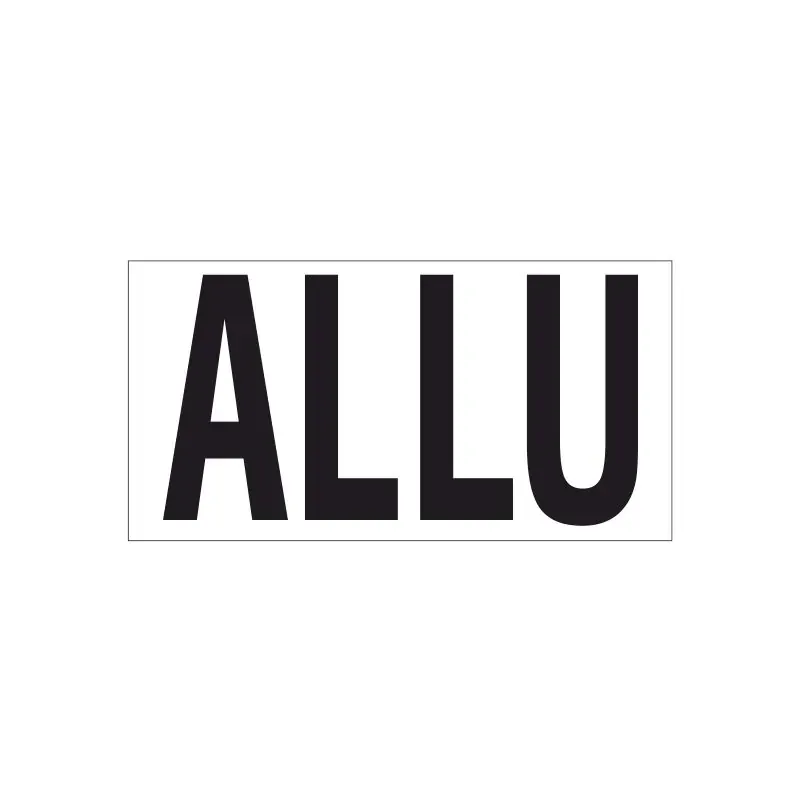
| Container number | owner code, U, serial number, check digit | door end, sides, roof, front |
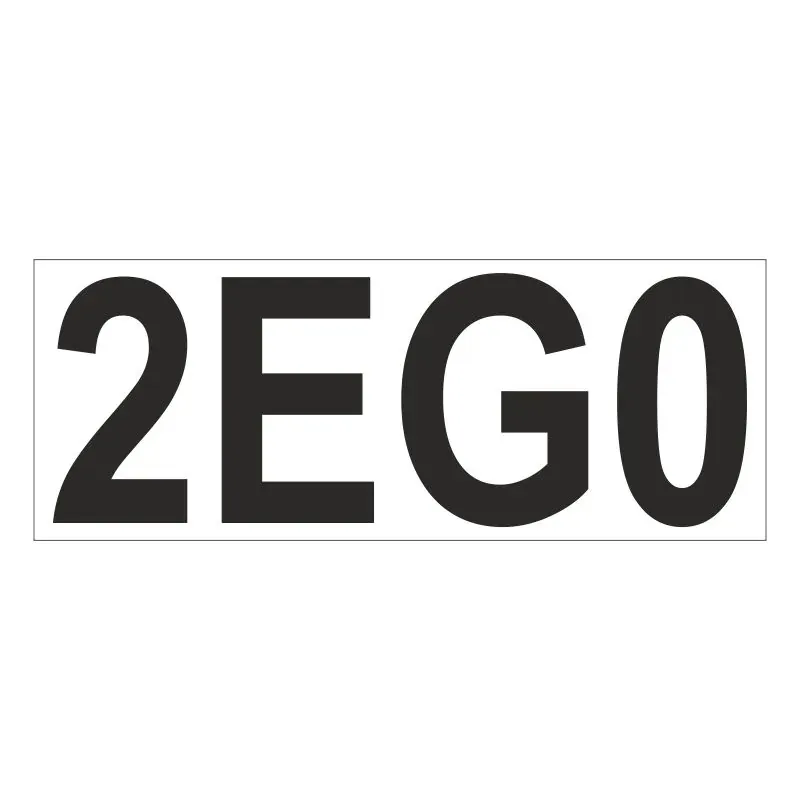
| Size & type code | for example 22G1 | on all four faces |
| Maximum gross weight, tare, payload, capacity | weights and volume | door end |
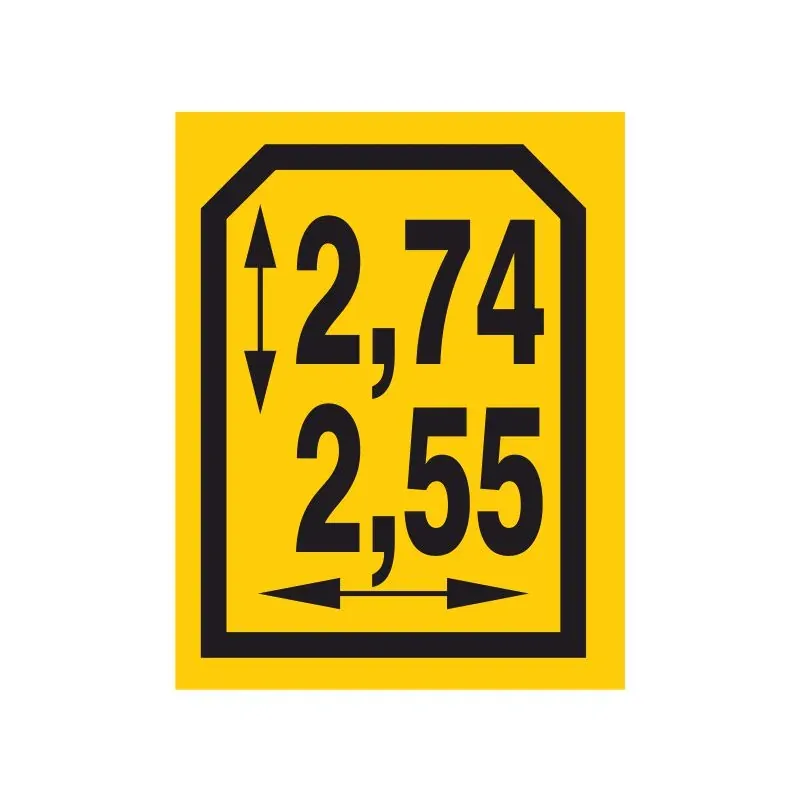
| Height mark | height in metres and in feet and inches | sides, near the right-hand edge |
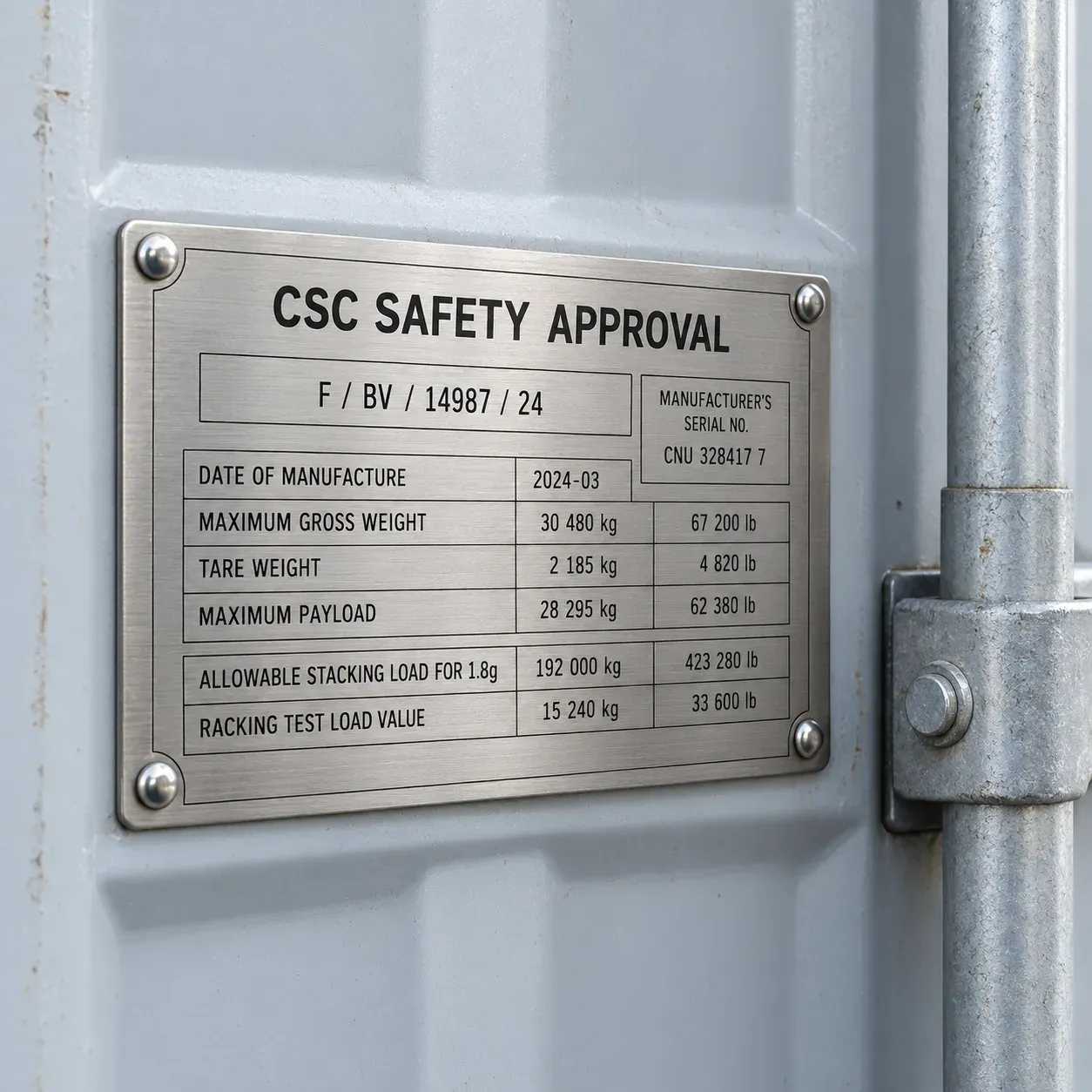
| CSC plate | approval data | usually outside on the left-hand door |
| High-voltage warning | symbol on yellow | next to the ladder, if there is one |
Container number and size & type code
These markings appear on the door end, both sides, the roof and the front. The characters are at least 100 mm high, durable and in a colour that contrasts with the container. See Container number and check digit and Size-type codes explained.
Maximum gross weight, tare and payload
The maximum gross weight is the greatest permitted mass of the container and its cargo together. The tare is the mass of the empty container, including permanently fitted equipment. The maximum payload is the difference between the two. These definitions come from the CSC convention.
The maximum gross weight on the container must match the weight on the CSC plate. BIC lists two weight markings as mandatory: the maximum gross weight and the tare. The characters are at least 50 mm high. Some owners also add the payload and the capacity. BIC places this information at the door end.
Height mark
For containers higher than 2.6 metres, BIC prescribes a height mark. It shows two series of numbers: the height in metres (to the nearest 0.1 metre) and in feet and inches. The mark is placed in two positions, on each side of the container, close to the right-hand edge (within 0.6 metres). It is no more than 1.2 metres below the top. The mark is at least 115 × 155 mm. A high cube of 9 feet 6 inches falls under this.
CSC plate
The CSC Safety Approval Plate is a permanent, non-corroding, fire-resistant plate of at least 200 × 100 mm. It is fixed when the container is built, usually with rivets on the outside of the left-hand door. The text is in English or French in any case. The heading "CSC SAFETY APPROVAL" has letters of at least 8 mm, the rest at least 5 mm. The plate contains, among other things:
- the country of approval and the approval number;
- month and year of manufacture;
- the manufacturer's identification number;
- the maximum gross weight in kg and lbs;
- the allowable stacking load for 1.8 g, in kg and lbs;
- the transverse racking test, in newtons.
The full list is in What is on a CSC plate?.
High-voltage warning
Containers with a ladder carry a warning about overhead electricity: a black symbol on a yellow background with a black border, next to the ladder. The lightning bolt is at least 175 mm high and the sign at least 230 mm wide.
What do we do with this?
We engrave CSC data plates in stainless steel in 15 versions. We also supply container size decals with height marks in 125 × 160 mm and 140 × 180 mm, and fill-in weight labels of 670 × 570 mm, with your own details. Approving a container, measuring it and determining the values is done by you or your inspection body; we apply the data you give us.
Frequently asked questions
Does the weight on the door have to match the CSC plate?
Yes. The maximum gross weight on the container must match the data on the plate.
Where is the CSC plate?
Usually outside on the left-hand door, riveted on when the container is built.
Does every container need a height mark?
Only containers higher than 2.6 metres, according to BIC. A standard container of 8 feet 6 inches (2591 mm) is lower than 2.6 metres and so does not fall under it.
Questions about this text? Email info@kuyper-graveertechniek.com or call 010 216 2344.