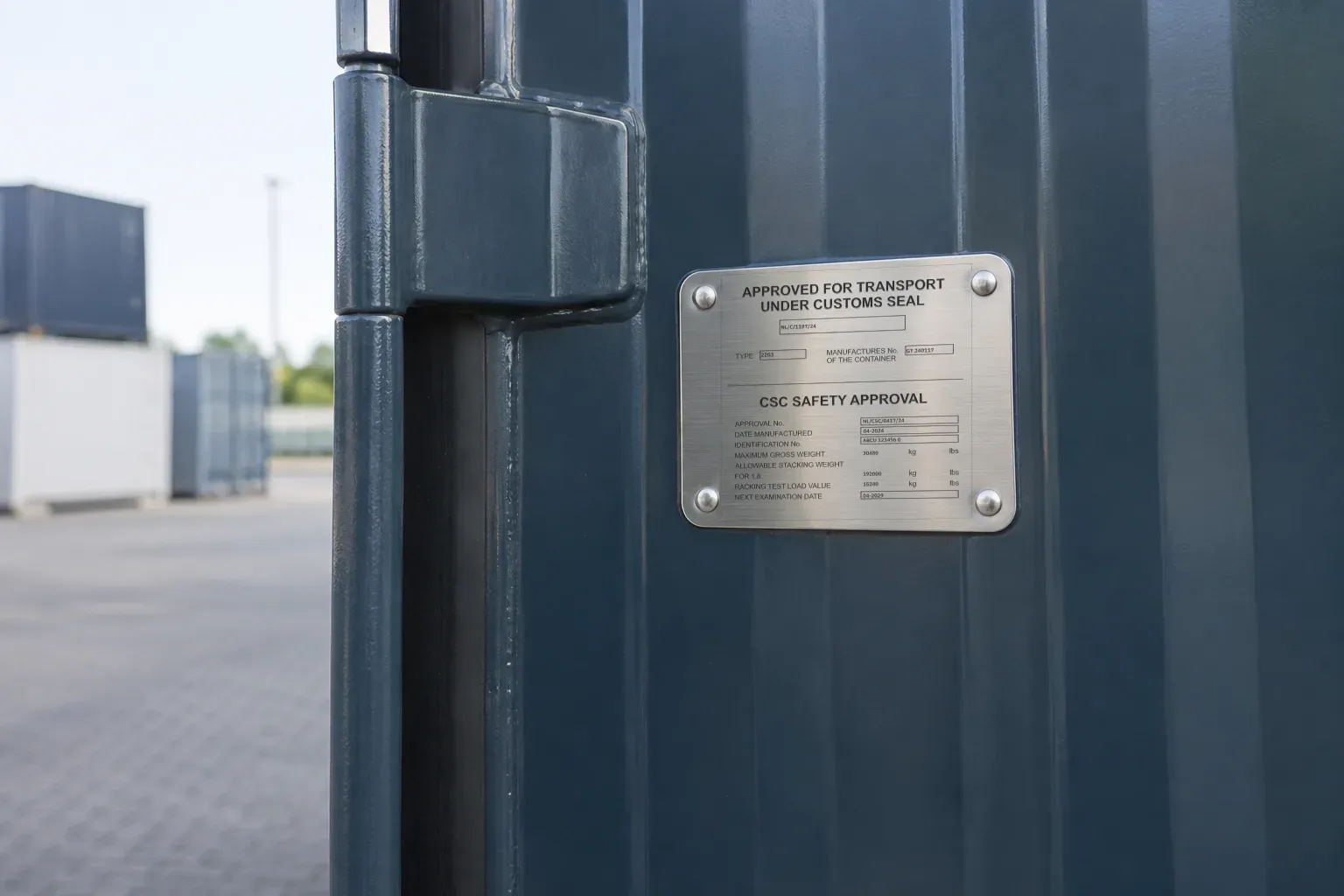
About the sources: the IMDG Code itself is paid for and could not be consulted. For the road rules we read the official Swiss government edition of the ADR 2025. ILT names the same chapters (5.2 and 5.3) for both, but we have not checked the text for sea ourselves. Dimensions and rules on this page therefore come from the ADR; where that is the case, it says so.
Which rules apply where?
According to the Inspectie Leefomgeving en Transport (ILT, the Dutch Human Environment and Transport Inspectorate), the ADR rules apply to road transport and the IMDG Code rules to sea transport. Packages and transport units are marked according to chapters 5.2 and 5.3 of both. The labels and marks must remain clearly legible, even after at least three months of immersion in water (ILT).
The placard
The placard is a large sign for the outside of the container, matching the hazard labels of the cargo. For the ADR the following applies (chapter 5.3.1):
- shape: a square set on one of its points (diamond);
- size: at least 250 × 250 mm, measured to the edge;
- a line inside the edge, 12.5 mm from the edge, in the same colour as the symbol;
- the class number is at least 25 mm high;
- weather-resistant and remaining recognisable throughout the transport.
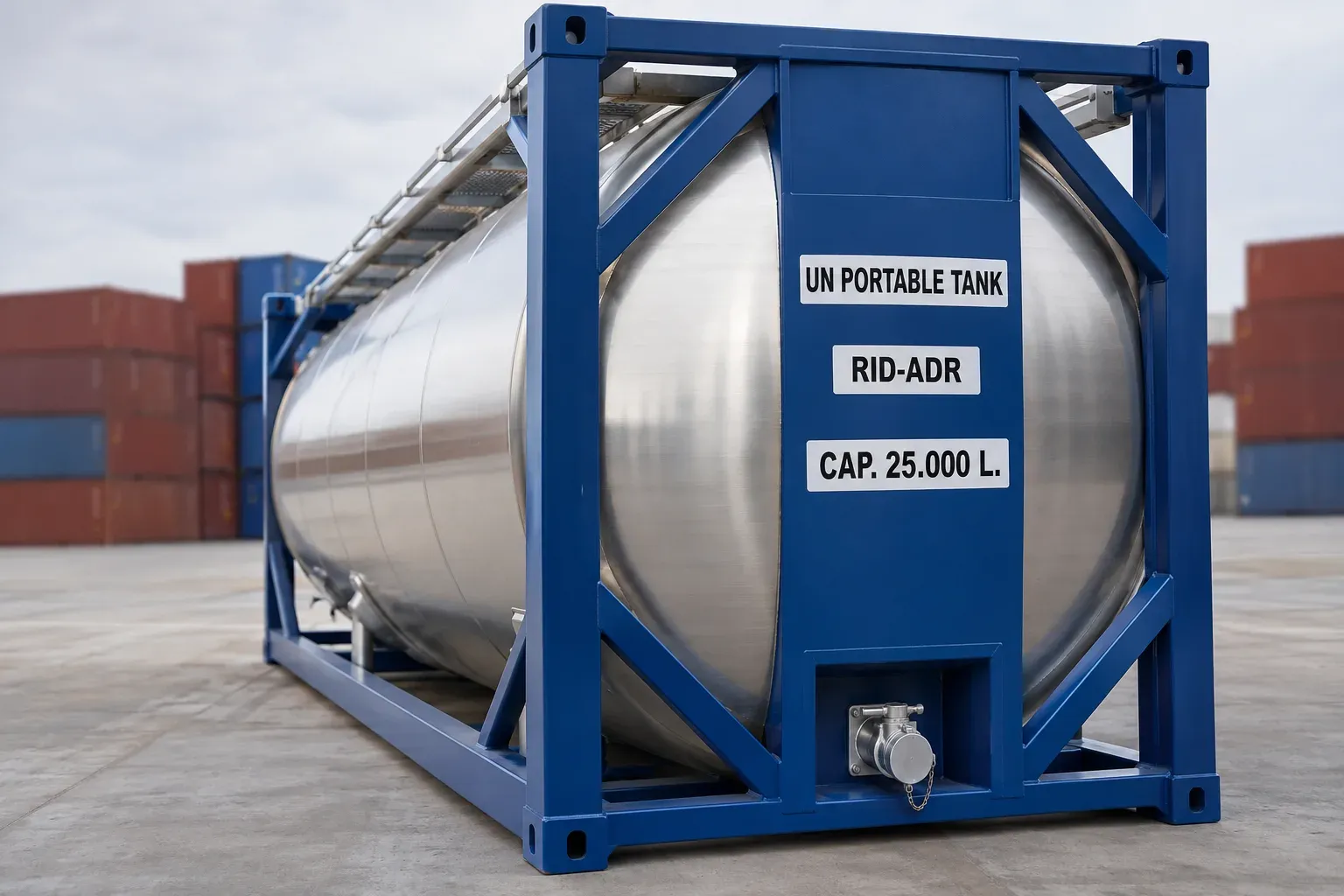
On a container, placards are fitted on both long sides and at both ends. Placards that do not belong to the cargo must be removed or covered. A container that is empty but not cleaned keeps the placards of the previous cargo.
If a container holds goods of several classes, a subsidiary hazard does not need its own placard if another placard already shows that hazard.
The mark for environmentally hazardous substances
The mark with a fish and a tree is called the "marine pollutant" mark in the IMDG Code. In the ADR it is the mark for environmentally hazardous substances. On a package it is at least 100 × 100 mm. It is not needed on single packagings or inner packagings of up to 5 litres or 5 kg.
According to the ADR (5.3.6), if a container has to carry placards and contains an environmentally hazardous substance, the mark also goes on the container. The minimum size is then 250 × 250 mm. For tank containers of up to 3000 litres with too little space, it may be 100 × 100 mm. For sea transport the rules of the IMDG Code apply; have your carrier or adviser confirm which rules apply on your route.
What do we supply?
We supply stickers for ADR and IMO, mostly in 250 × 250 mm, per 100 pieces. These include classes 1 to 9 (such as ADR 1.1 to 1.6 and IMO 2.2, 3, 4.1, 5.1, 6.1 and 8), the Environmentally hazardous substances mark, the limited-quantity mark and the mark for class 7 (fissile). We make them to the official symbols. We do not supply signs or plates. Whether a sticker meets the requirements for your transport is for the shipper to decide; we do not assess your cargo.
Frequently asked questions
What is the difference between a hazard label and a placard?
The label goes on the package. The placard goes on the container, the vehicle or the tank and is at least 250 × 250 mm.
Do I need placards if I only send one package?
That depends on the container and the cargo. Ask your freight forwarder or carrier.
May I use a smaller placard?
In the ADR, 250 × 250 mm is the minimum for containers. There is no smaller size, except for the environmental mark on small tank containers (100 × 100 mm).
Questions about this text? Email info@kuyper-graveertechniek.com or call 010 216 2344.