
What are CLP and GHS?
GHS is the United Nations' globally harmonised system for classifying and labelling chemicals. CLP is the European regulation that applies this system in the EU. Manufacturers, importers and downstream users must classify, label and package their hazardous substances and mixtures in line with CLP before placing them on the market (ECHA).
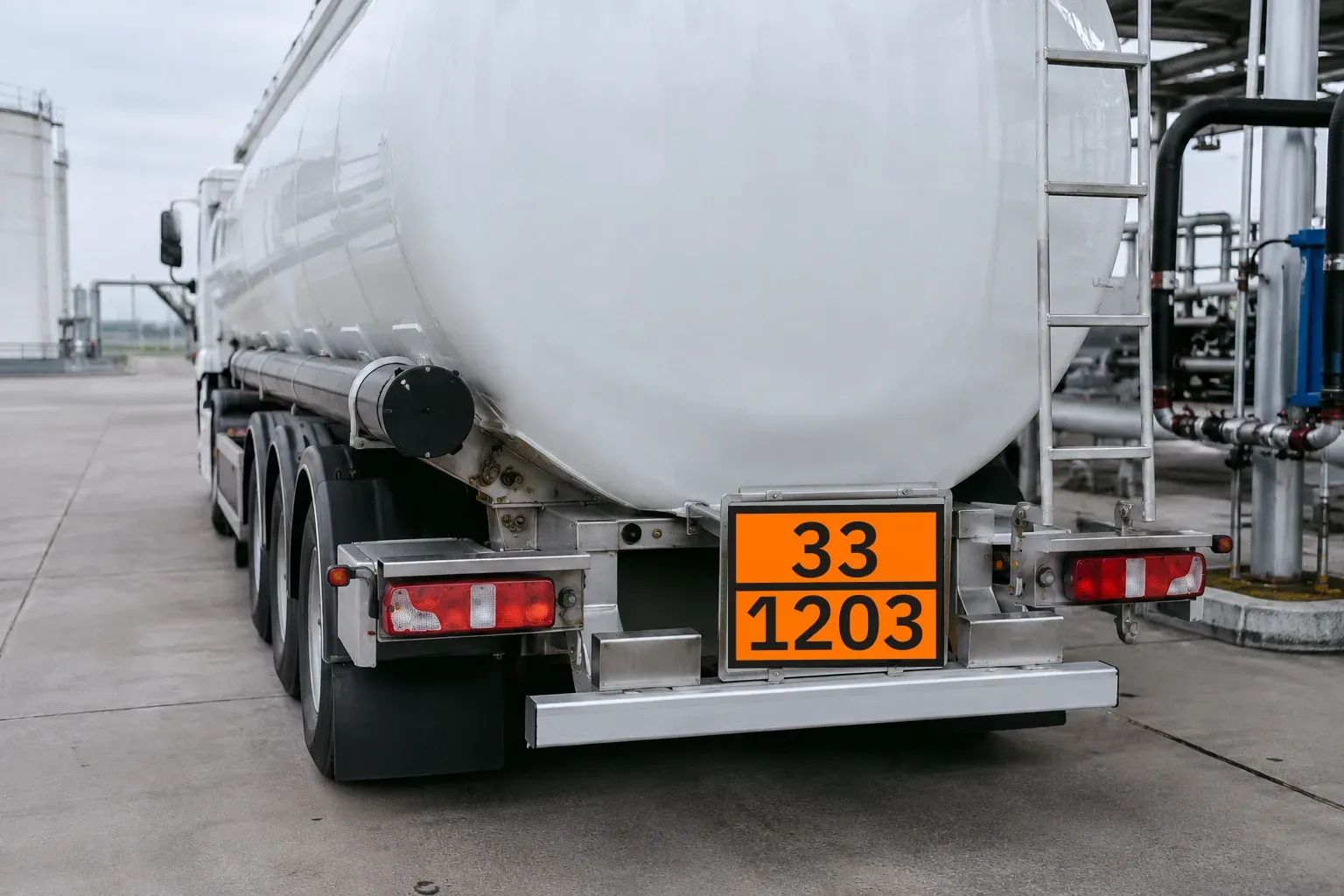
CLP does not apply to the transport of dangerous goods. Separate rules apply to that, such as the ADR (road) and the IMDG Code (sea). See also our guide on the orange ADR plate.
The nine pictograms
A hazard pictogram is a square set on one of its points, with a red border and a white background (HSE, ECHA). Annex V of CLP contains the nine pictograms, each with a code from GHS01 to GHS09. We use the same codes in our range.
| Code | Symbol | Concerns |
|---|---|---|
| GHS01 | Exploding bomb | Explosive substances |
| GHS02 | Flame | Flammable substances |
| GHS03 | Flame over circle | Oxidising substances |
| GHS04 | Gas cylinder | Gases under pressure |
| GHS05 | Corrosion | Corrosive substances, also serious eye damage |
| GHS06 | Skull and crossbones | Acute toxicity (toxic) |
| GHS07 | Exclamation mark | Irritants and other less serious health hazards |
| GHS08 | Health hazard | Serious long-term health hazard |
| GHS09 | Environment | Hazardous to the environment |
The symbol names in the table (exploding bomb, flame, flame over circle, gas cylinder, corrosion, skull and crossbones, exclamation mark, health hazard, environment) are the names from Annex V. The exclamation mark (GHS07) is also used there for substances that harm the ozone layer.
Which pictogram goes with which substance depends on how the substance is classified. That classification follows from the criteria in Annex I of CLP. Your supplier or the safety data sheets give the classification.
What must be on a CLP label?
The label must be firmly attached to the packaging and, according to ECHA, contains:
- the name, address and telephone number of the supplier;
- the nominal quantity in the package, unless it is given elsewhere on the package;
- the product identifier;
- where applicable, the hazard pictograms;
- the signal word: "Danger" for the more serious hazards, "Warning" for the less serious;
- the hazard statements (H statements);
- the precautionary statements (P statements);
- additional information required by other legislation.
The text must be in the official language or languages of the Member State where the product is placed on the market (CLP, Article 31).
What changes on 1 January 2027?
Regulation (EU) 2024/2865 amends CLP. From 1 January 2027, minimum dimensions apply to the label, pictogram and lettering. Up to and including 31 December 2026 you may still label according to the text before the amendment. A few examples from the new table:
- For a content of up to and including 0.5 litres: a label of at least 52 × 74 mm where possible, pictograms of at least 10 × 10 mm (16 × 16 mm where possible) and a letter height (x-height) of 1.2 mm.
- For more than 500 litres: a label of at least 148 × 210 mm, pictograms of at least 46 × 46 mm and an x-height of 2.0 mm.
- The text is black on white, with a line spacing of at least 120 % of the font size and one legible sans-serif typeface.
What do we supply?
We supply GHS stickers GHS01 to GHS09 in 250 × 250 mm, per 100 pieces, made to the official symbols. That size is much larger than the pictograms on a normal product label (10 to 46 mm in the table above). The stickers therefore suit large objects, such as a tank or a storage area.
A sticker is not a complete CLP label. Supplier, product identifier, signal word and H and P statements must be on it too. If you need a different size, request a quote.
Frequently asked questions
Is a GHS pictogram the same as an ADR hazard label?
No. GHS pictograms belong to CLP and are for use outside transport. For transport, the hazard labels of the ADR or the IMDG Code apply. A package can fall under both systems.
Must there always be a pictogram on the label?
Only "where applicable", that is, if the classification of the substance or mixture requires one. The signal word and the statements follow from the same classification.
In which language must the label be?
In the official language or languages of the country where you place the product on the market. In the Netherlands that is Dutch.
Questions about this text? Email info@kuyper-graveertechniek.com or call 010 216 2344.